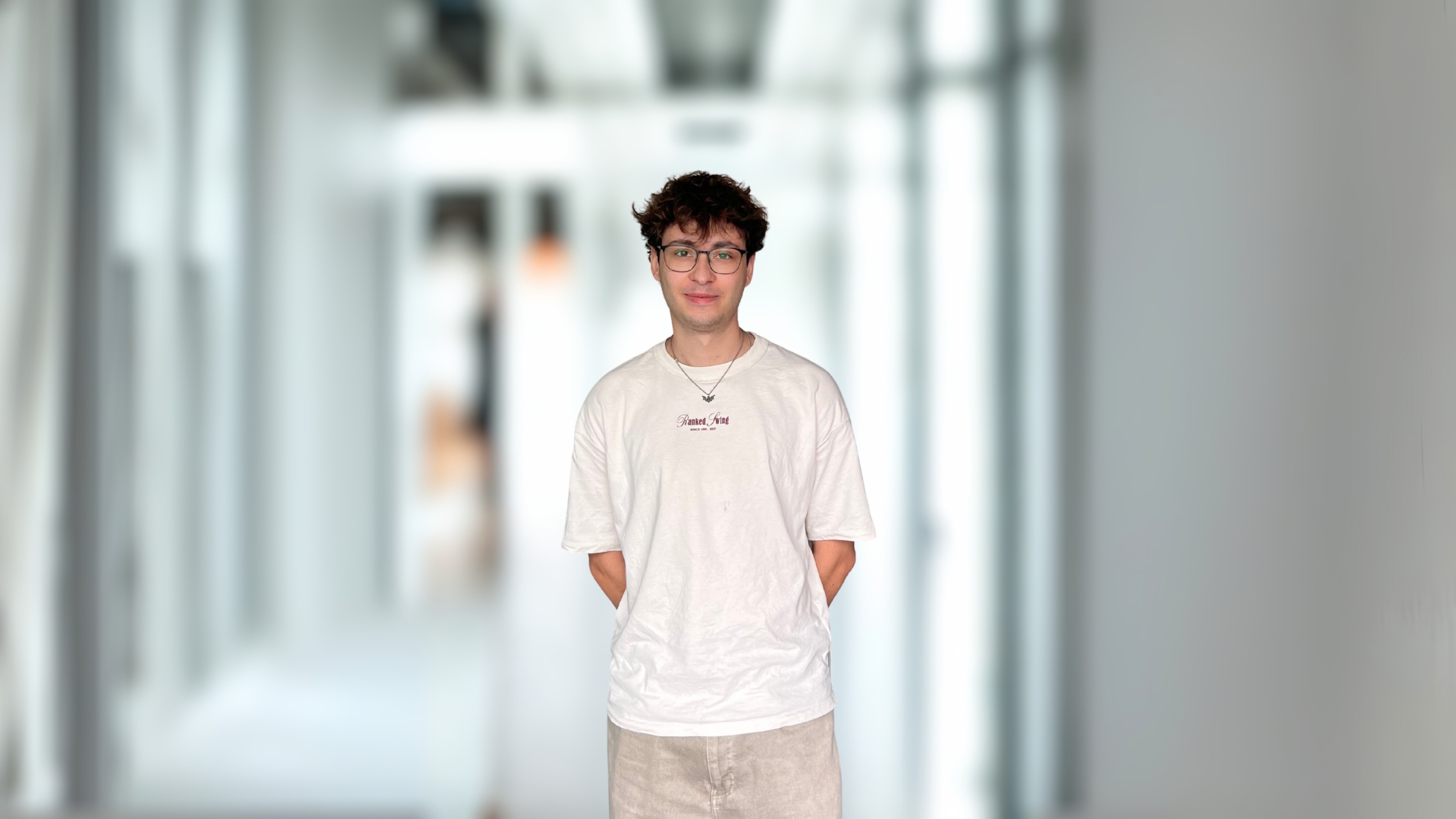
There comes a moment at the beginning of any professional journey when we realise the path may not be exactly what we once imagined. For Carolina Gomes, that moment was not an obstacle — it was a starting point.
With a background in communication and innovation, moving into logistics and management could seem like a deviation. In practice, however, it became a conscious choice.
Rather than following a linear path, Carolina chose to explore the unknown. And that is precisely where transformation begins: when we stop seeing our background as a limitation and start viewing it as just one of many tools we carry with us.
Building discipline and precision
In a demanding environment where precision is essential, Carolina developed her own ways of working. Small routines, constant reviews, careful attention. “I try to maintain an organised routine, review tasks whenever necessary and learn from the experience of my colleagues.”
Over time, rigour stopped being just an external requirement and became part of her own work approach. And it is in the most demanding periods that this becomes most evident. “During more demanding periods, you can really see how individual discipline benefits the whole team.”
Here, organisation moves beyond the individual — it becomes collective.
The impact of small things
In the early days, the pace, processes and level of demand brought a new perspective on work. It quickly became clear that, in an operational context, no detail is insignificant. “One of the biggest lessons has been understanding how important every detail and every process is to the final outcome.”
What might initially seem routine proved to be essential. Small decisions, seemingly simple tasks — everything contributes to the overall functioning. And it is in balancing speed with accuracy that the real challenge lies.
More than learning new roles, it required a shift in mindset: more practical, more organised, more solution-oriented. Because stepping into a different field inevitably means starting from scratch — asking questions, observing, making mistakes and adjusting. For Carolina, this process became a constant.
“It has been a very enriching experience, especially due to the need for constant adaptation, organisation and the ability to learn quickly.”
Over time, what was once unfamiliar began to take shape. Organisation and prioritisation stopped being a conscious effort and became a natural part of everyday life. Attention to detail and adaptability developed almost without noticing.
But this growth did not happen in isolation. The environment at Exatronic — collaborative and focused on learning — played an important role, showing that growth also comes from learning with others.
Being part of something bigger
There is a deeply rooted idea that we should follow the field we studied, as if it were the “right” path. Carolina’s experience shows otherwise. “We don’t always start on the path we imagined, but often it’s those unexpected challenges that help us discover new abilities.”
Changing direction — whether early or later — doesn’t mean losing your way. In fact, it can be the most effective way to find it. Each experience brings new perspectives, new skills and a greater ability to adapt — something increasingly valuable.
And amid the demands and constant learning, one thing remains: enthusiasm. “It’s motivating to be part of a dynamic environment where every day brings new challenges and new learning opportunities.”
Being close to operations makes it possible to see the real impact of the work and understand how different areas connect. Every task, every process, every detail contributes to a shared goal.
And perhaps that is the greatest realisation: professional growth doesn’t always mean following the original plan — but being willing to reinvent it along the way.